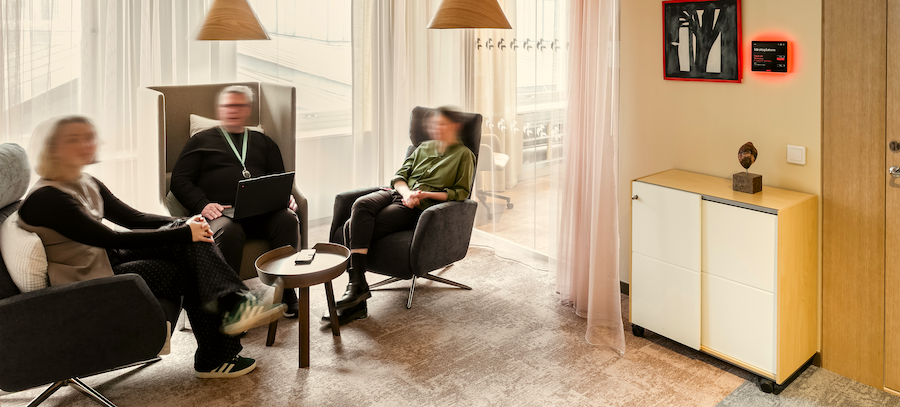
The return-to-office debate is usually framed around one question: how many days should employees be required to come in?
It may be the wrong question. Attendance tells you where people work. It doesn’t tell you whether they collaborate well, get focused work done, learn from colleagues or have a day that makes them want to come back.
A full office is not the same as a successful office. Now that hybrid work has settled into a more permanent rhythm, workplace leaders can move beyond attendance policies toward something more meaningful: purposeful presence.
Key takeaways
- Office attendance measures presence, not value. The better question is what the office enables when people get there.
- Employees haven’t rejected the office. They spend just over half the working week there, and many would come in more if the workplace supported how they work.
- Choice over how and where people work is strongly linked to productivity and to how employees rate their workplace.
The workplace experience starts before the commute. Every open question about desks, rooms, colleagues or parking adds friction.
 Choice over how and where people work is strongly linked to productivity.
What is purposeful presence?
Purposeful presence means designing the workplace so that coming in leads to something valuable, such as collaboration, focused work, learning or social connection, instead of treating attendance as the goal in itself. Under this approach, attendance becomes a result of a good workplace rather than something a policy forces.
Have employees rejected the office?
No, Gensler’s 2026 Global Workplace Survey found that employees spend about 55% of their working week in the office, and that many would ideally spend more time there when the workplace supports how they need to work.
That distinction matters. The office doesn’t need stronger incentives to get people in. It needs to offer a better experience.
The same research found that two-thirds of office workers are “hacking” their workplace to make up for its shortcomings. They adjust their surroundings for temperature, ergonomics or privacy, or work around noise and a lack of available meeting rooms. People are showing up, but too often the office isn’t ready for them when they arrive.
Why presence alone isn’t enough
A good office brings people closer to each other and to ideas. It makes collaboration more spontaneous, learning more natural and culture more tangible. It can offer space for concentrated work one hour and bring a team together the next.
Putting people in the same building doesn’t automatically create those moments. An employee who commutes only to spend the day in video calls may reasonably wonder what the journey was for. Someone who arrives to find no suitable desk, no quiet space and no free meeting room is unlikely to feel that coming in improved their day.
The goal shouldn’t simply be presence. It should be purposeful presence: a workplace useful enough that being there makes something valuable possible.
Will AI make the office less important?
Many assume that more technology means less need to meet in person.Gensler’s 2026 Global Workplace Survey suggests the opposite. About 30% of office workers are now AI power users, and they spend less of their working week alone than late adopters do (37% compared with 42%), and more time learning and socializing with colleagues.
As AI takes over more routine tasks, a bigger share of work becomes the kind that happens between people: sharing knowledge, solving problems together, learning from each other. That makes the office more relevant, not less, as long as it’s designed to support those moments.

An employee who commutes only to spend the day in video calls may reasonably wonder what the journey was for.
How does choice affect the workplace experience?
Choice is a big part of the equation. Gensler’s 2025 Global Workplace Survey found that employees with a high degree of choice in how and where they work are 2.5 times more likely to say their workplace supports individual and team productivity, and nearly three times more likely to call their office a great place to work.
Choice doesn’t mean everyone works remotely. It means people can match the environment to the task in front of them, whether that’s collaboration, concentration, connection or learning.
Where does the office experience begin?
It begins before an employee leaves home. Will my colleagues be there? Is there a suitable desk? Can I park? Can I actually book the meeting room I need?
Every unanswered question adds friction to the commute. Workplace technology is most useful when it removes that uncertainty without getting in the way. Booking, wayfinding, room availability and workspace information should make the office easier to use, not add another system people have to think about.
Organizations also need to know whether the workplace actually works for the people using it. Humly Sense, for example, brings signals from compatible third-party sensors, including occupancy and environmental data, into the Humly ecosystem. Combined with booking data, this helps workplace teams see how spaces are really used and spot the conditions that create friction.
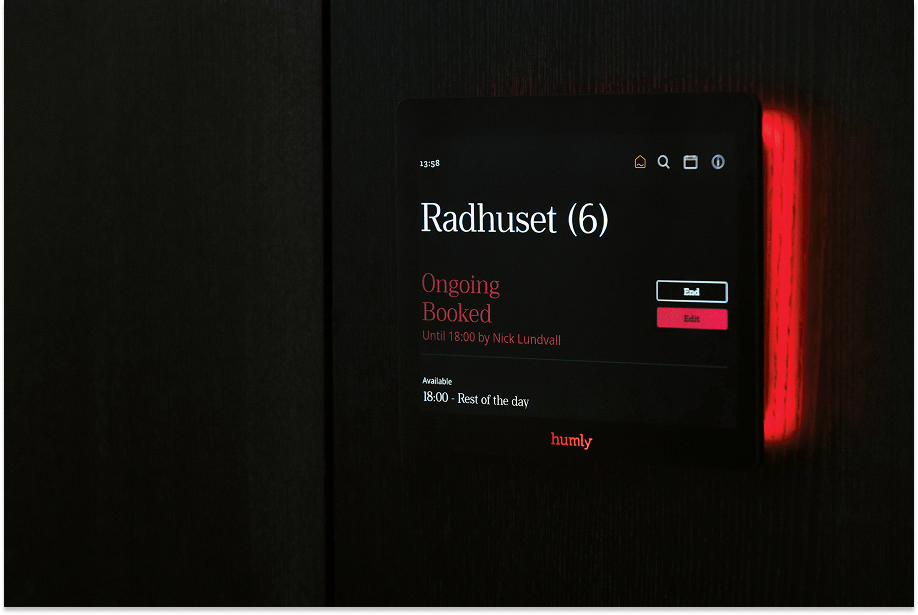 Humly Room Display, through Humly Sense, brings data directly to the display.
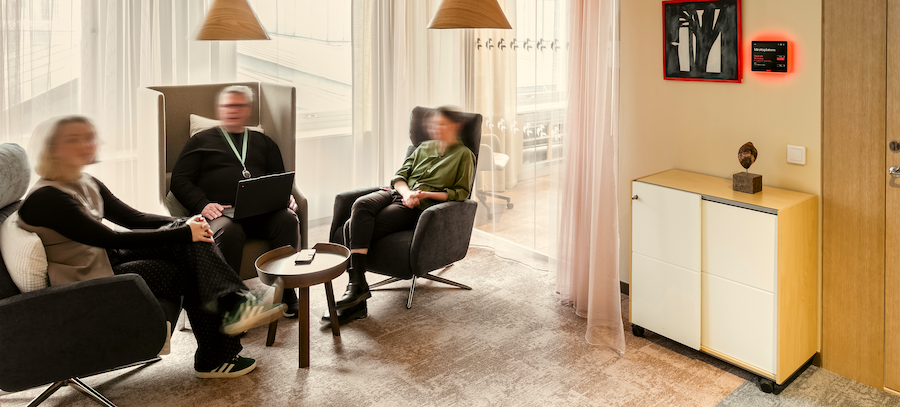 Humly is designed to help workplaces see how spaces are really used.
How do you make the office worth choosing?
Mandates can decide where someone works on a given day. On their own, they can’t make that day productive, collaborative or worthwhile.
A better long-term measure is whether employees see value in being there. Organizations that create spaces for collaboration, concentration, connection and learning, and remove the everyday friction around using them, give people reasons to come together that go beyond policy.
The future of the office is less about forcing a return and more about building a workplace people want to return to. Make presence purposeful, and attendance becomes a result instead of the goal.
Sources: Gensler Research Institute, Global Workplace Survey 2026 and 2025
See how Humly makes rooms, desks and directions easy to find before anyone leaves home.
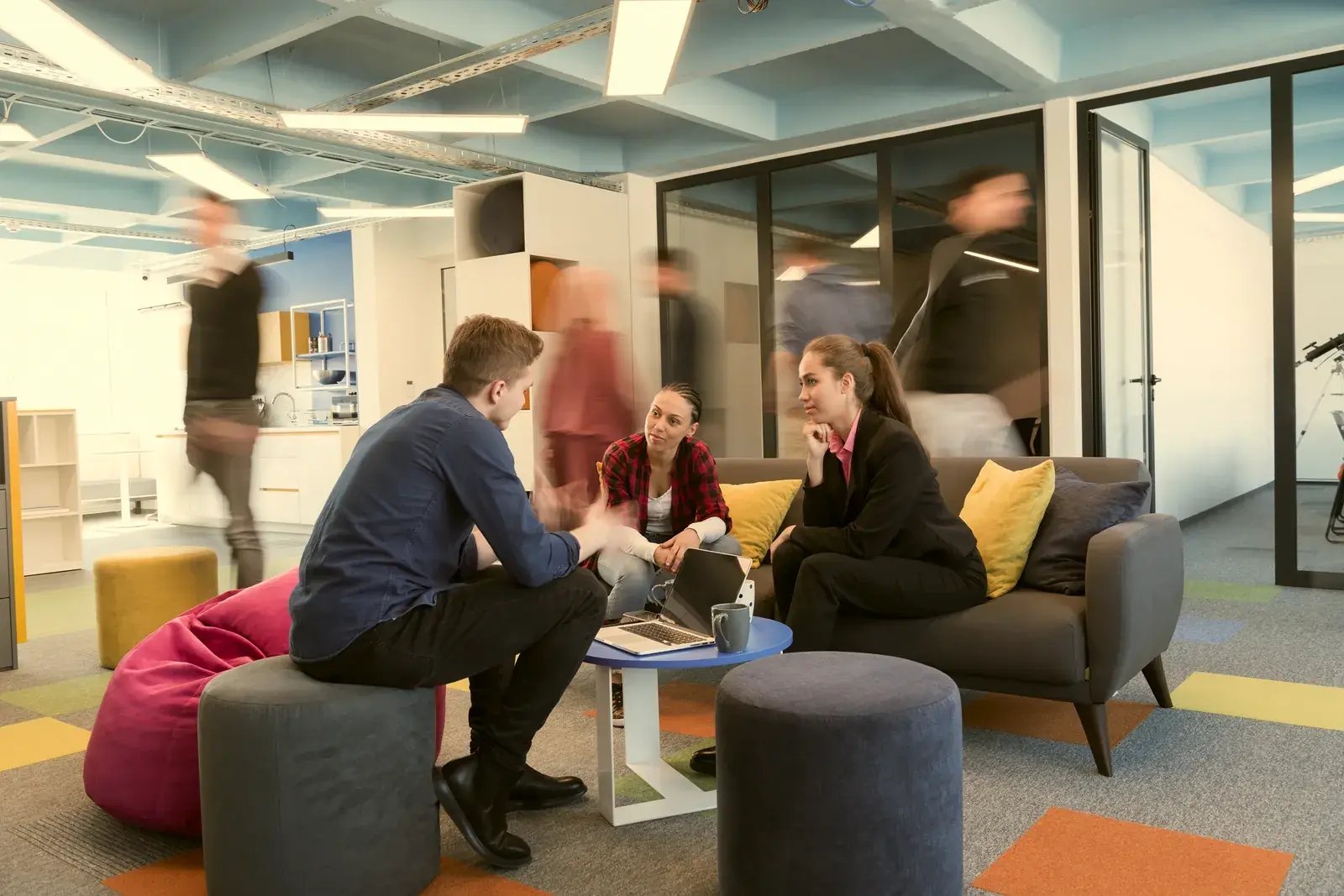 A long-term measure is whether employees see value in being in the office.
FAQ
What is the difference between a return-to-office mandate and purposeful presence?
A mandate sets how many days employees must be in the office. Purposeful presence focuses on what the office offers when they arrive, so people choose to come in because the workplace supports their work.
How much time do employees spend in the office?
According to Gensler’s 2026 Global Workplace Survey, employees spend about 55% of their working week in the office.
Why do employees “hack” their workplace?
To make up for gaps such as poor temperature, ergonomics, privacy, noise or a lack of available meeting rooms. Gensler found that two-thirds of office workers do this.
How can workplace technology reduce friction in a hybrid office?
By answering the practical questions before and during the office day: which desks and rooms are free, where colleagues are, how to find your way and how spaces are actually used. Booking, wayfinding and sensor data together make the office easier to plan and use.
Does AI reduce the need for an office?
Not according to Gensler’s 2026 Global Workplace Survey. Employees who use AI the most spend less time working alone and more time learning and socializing than late adopters, which suggests the office becomes more important as a place for collaboration and learning.
Want more on the hybrid workplace? Get our insights in your inbox.

Stay Updated with Humly
Subscribe to our newsletter to get the latest product updates and partnerships.
